Review: Seamless Rose Flower Pattern Redwork
As a designer who spends more time staring at stitch maps than actual fabric, I have learned that the difference between a good machine embroidery design and a great one often lies in its versatility. Recently, I pulled up the Seamless Rose Flower Pattern Redwork to evaluate it for an upcoming batch of custom orders. My goal was not just to see if it stitched out cleanly, but to determine if it could carry the weight of a professional finished product in a competitive market.
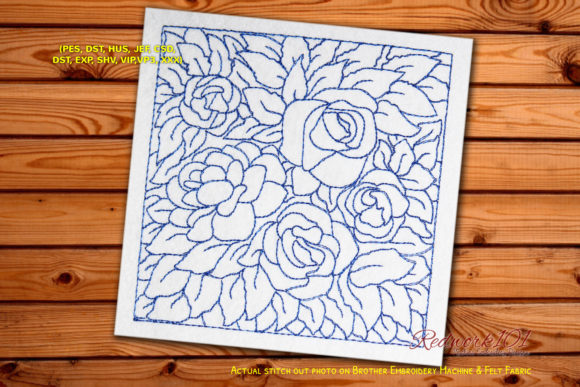
The first impression is one of understated elegance. Redwork, by definition, relies on a single thread color—traditionally red, though modern interpretations vary—to create line art that feels both vintage and contemporary. This particular pattern captures that duality well. The roses are rendered with a clarity that avoids the muddy look some digital conversions suffer from. For those of us in the Bouquets category of design assets, finding a floral motif that doesn’t look cluttered when repeated or scaled is a constant challenge. This design manages to keep the botanical integrity of the rose while simplifying the lines enough for efficient stitching.
Real-World Application: The Tote Bag Test
To truly judge an embroidery file, you have to imagine it on a physical object. I visualized this pattern on a natural canvas tote bag, a staple for any Etsy seller or craft business. The seamless nature of the pattern suggests it could be used as an all-over print effect if tiled correctly, or as a singular, striking focal point.
In my mental mockup, I placed the design on the lower corner of the bag. The clean lines of the redwork style mean it doesn’t require heavy fill stitch coverage, which is a massive advantage for large items like totes. Heavy fills can make fabric stiff and pucker easily. By relying on outline and detail work, the Seamless Rose Flower Pattern Redwork allows the texture of the fabric to remain visible, adding to the handmade appeal. It feels intentional, not just stamped on. For a personalized gift, this subtlety often sells better than loud, dense graphics because it appeals to customers looking for minimalist, boutique-style aesthetics.
Versatility Across Product Lines
Beyond tote bags, I considered how this design would perform on other common custom apparel and home goods. The simplicity of redwork makes it incredibly adaptable. Here is where I see it shining:
- Sweatshirt Embroidery: On a heather grey or cream crewneck, the single-color outline provides a sophisticated contrast without overwhelming the garment. It works particularly well on the cuff or behind the neck for a subtle branding touch.
- Kitchen Textiles: Tea towels and aprons are classic homes for redwork. The floral theme fits naturally here, evoking a sense of traditional craftsmanship. Since these items undergo frequent washing, the lower stitch density of this design means less risk of thread breakage or fabric distortion over time.
- Baby Embroidery: Softness is key for infant items. Because this design avoids dense satin columns or heavy fills, it remains soft against sensitive skin. It would look charming on a muslin swaddle or a simple onesie, provided the scale is adjusted appropriately.
- Embroidered Patches: If you are creating design assets for patches, the clear outlines of this rose pattern translate well to merrowed edges. It creates a distinct shape that is easy to cut and finish professionally.
Technical Considerations and Fabric Choice
While the design is robust, no digital embroidery file is universal. There are specific scenarios where you need to exercise caution. The description notes that the box stitch shown in preview images is optional and often a different color. This is a crucial detail. In a real-world embroidery project, you must decide whether to include this bounding box. For most apparel applications, I recommend skipping it unless it serves a specific structural purpose for your stabilizer setup.
Fabric texture plays a significant role here. On smooth cottons or linens, the lines will appear crisp and defined. However, on textured fabrics like terry cloth or heavy wool, the fine details of the rose petals might get lost. If you are working with stretchy fabric like jersey knits for t-shirts, proper stabilization is non-negotiable. Even with low-density designs, the pull of the thread can distort the fabric if not supported correctly. I always advise testing on scrap fabric first, especially if you are new to working with the specific material your client has chosen.
Another consideration is the hoop size. Since this is a seamless pattern, you have the flexibility to scale it. However, scaling too small can cause the stitches to merge, losing the delicate separation between petals. Conversely, scaling it too large without adjusting stitch length can result in long, loose threads that snag easily. Always check the recommended hoop size limits provided with the file, and if they are not explicitly stated, do a test run at your intended size before committing to customer goods.
Visual Appeal and Brand Consistency
For small shop product lines, consistency is key to building brand recognition. The Seamless Rose Flower Pattern Redwork offers a timeless look that does not trend in and out of fashion quickly. This longevity is valuable for commercial embroidery projects where you want your inventory to remain relevant for multiple seasons. Whether you are preparing for holiday embroidery gifts or spring collections, the rose motif is perennially popular.
From a marketing perspective, this design photographs well. The high contrast of single-color thread against neutral backgrounds creates clean, sharp images for your printable mockup galleries and social media posts. Customers can instantly see the detail, which builds trust in the quality of your work. It signals that you care about precision and aesthetic harmony, rather than just churning out generic designs.
Practical Designer Notes
Before you load this into your machine for a paid order, take a moment to review the technical specs. Since the product description does not specify exact stitch counts or file formats, you must verify these details upon download. Ensure the file format is compatible with your specific machine brand. Check the thread color recommendations; while red is traditional, experimenting with navy, forest green, or black can completely change the mood of the piece, making it suitable for different target audiences.
Also, consider the licensing. If you plan to sell finished items featuring this design, confirm that the license permits commercial use. Most designers offer different tiers for personal versus commercial rights. Respecting these terms protects your business and supports the creative community.
In conclusion, the Seamless Rose Flower Pattern Redwork is a solid addition to any designer’s library. It balances artistic charm with technical practicality. It is not just a pretty picture; it is a functional tool for creating high-quality, marketable goods. By understanding its strengths in low-density application and its limitations on textured surfaces, you can leverage this design to enhance your handmade product offerings with confidence.